
INFANT & NEWBORN CHIROPRACTIC

Why Newborns Benefit From Chiropractic
Birth is your baby's first major physical experience — and it's an intense one. Even in uncomplicated deliveries, the forces placed on a newborn's head, neck, and spine are significant. When interventions are involved — vacuum extraction, forceps, prolonged pushing, or C-section — the stress multiplies.
This birth trauma can create subluxation in the upper cervical spine, which affects how the nervous system communicates with the rest of the body. The result can show up as feeding difficulty, excessive fussiness, poor sleep, digestive issues, or tension patterns that affect development.
Early assessment gives us the opportunity to identify and correct these issues before they compound.

Birth Trauma & the Nervous System
Your baby's nervous system is developing rapidly in the first months of life. When subluxation is present — especially in the upper neck — it can interfere with the brainstem and vagus nerve, which control feeding, digestion, sleep regulation, and immune function.
This is why so many newborn challenges are interconnected. A baby who struggles to latch may also have reflux. A baby with torticollis may also have a head shape concern. The nervous system is the common thread.
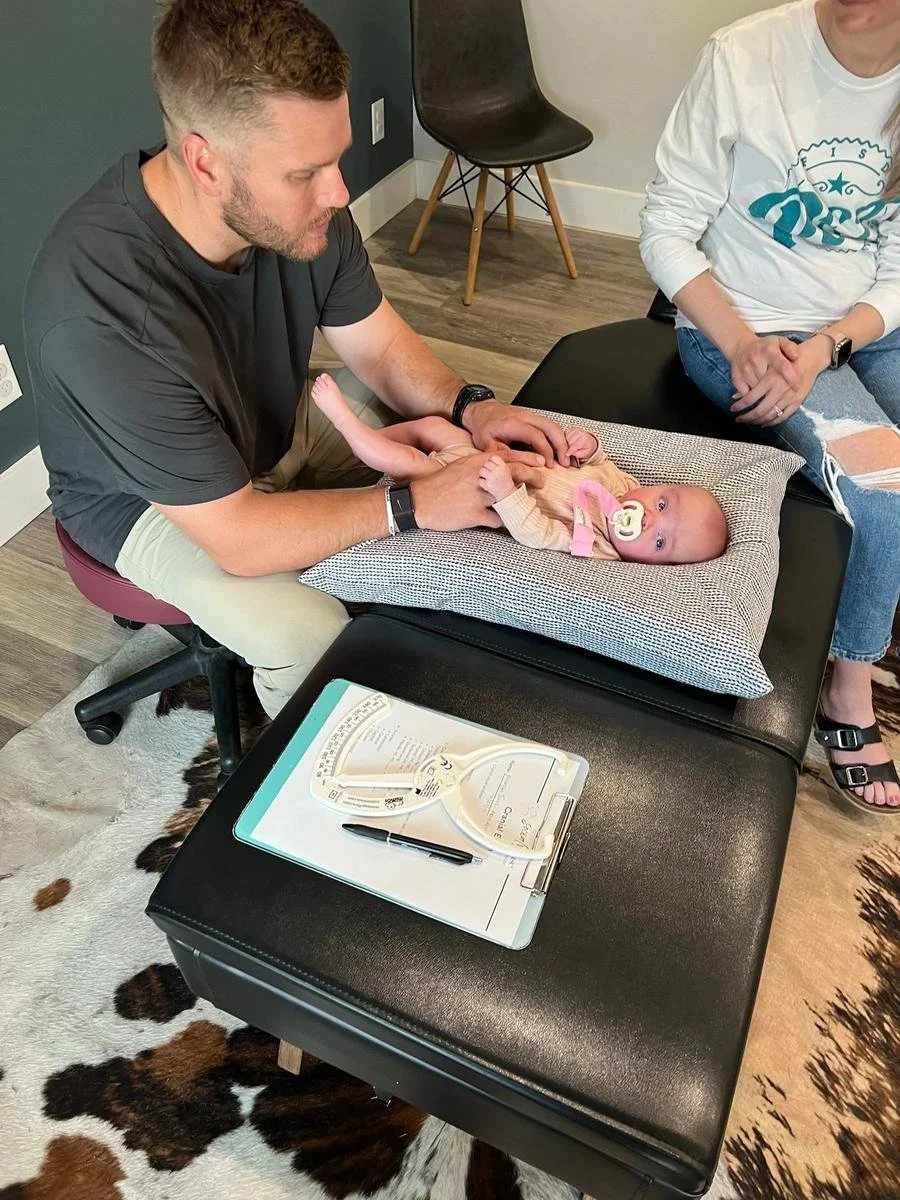
What We Look For in Your Baby
During your baby's assessment, we look for signs of subluxation and nervous system stress including difficulty latching or preference for one side, excessive crying or fussiness beyond normal patterns, poor sleep or difficulty settling, visible head tilt or limited neck range of motion, arching, spitting up, or signs of digestive discomfort, and tension or asymmetry in the body.
We use CLA INSiGHT scans — safe and non-invasive for newborns — to get an objective look at how your baby's nervous system is functioning.
How Gentle Is a Baby's Adjustment?
This is the most common question we hear — and the answer puts every parent at ease. Infant adjustments use fingertip pressure only. The amount of force is comparable to what you'd use to test the ripeness of an avocado. There's no twisting, cracking, or anything that would make your baby uncomfortable.
Most babies relax during their adjustment. Many fall asleep.

When to Bring Your Baby In
We recommend having your baby assessed as early as possible — ideally within the first few weeks of life. Early signs that your baby may benefit from care include:
Feeding challenges — difficulty latching, slow feeding, clicking sounds → Tongue tie support
Excessive crying — inconsolable for hours, especially in the evening → Colic care
Spitting up or arching — signs of digestive distress → Reflux support
Head tilt or preference — turning to one side, limited neck rotation → Torticollis care
Flat spots on the head → Plagiocephaly support
Frequently Asked Questions
Still have questions? Take a look at the FAQ or reach out anytime. If you’re feeling ready, go ahead and apply.
-
We see babies as early as their first week. The sooner we can assess, the sooner we can support healthy development.
-
Extremely gentle. We use only fingertip pressure — lighter than you'd use to press a button on your phone.
-
Difficulty feeding, excessive fussiness, poor sleep, head tilt, arching, reflux symptoms, and general tension are all common indicators.
-
Yes. Feeding challenges are often related to tension in the jaw, neck, or upper cervical spine. Gentle adjustments and craniosacral work can improve latch and feeding efficiency.