
TORTICOLLIS & CHIROPRACTIC
What Is Torticollis?
Torticollis is a condition where a baby's head tilts to one side due to tightness or shortening of the sternocleidomastoid (SCM) muscle in the neck. It may be congenital (present at birth) or acquired in the early weeks of life.
You might notice your baby consistently turning their head to one side, resisting turning the other direction, preferring one breast during feeding, or having visible asymmetry in their neck or head position.
Causes and Signs
Torticollis commonly develops from positioning in the womb (especially in breech or crowded pregnancies), birth trauma — particularly from vacuum, forceps, or difficult deliveries, prolonged time in one position after birth (car seats, swings, bouncers), and C-section, where the rapid change in pressure can affect cervical alignment.
Signs parents typically notice include a consistent head tilt or turn preference, difficulty latching on one side, asymmetry in head shape (which may indicate related plagiocephaly), and limited neck range of motion.
How Chiropractic Helps
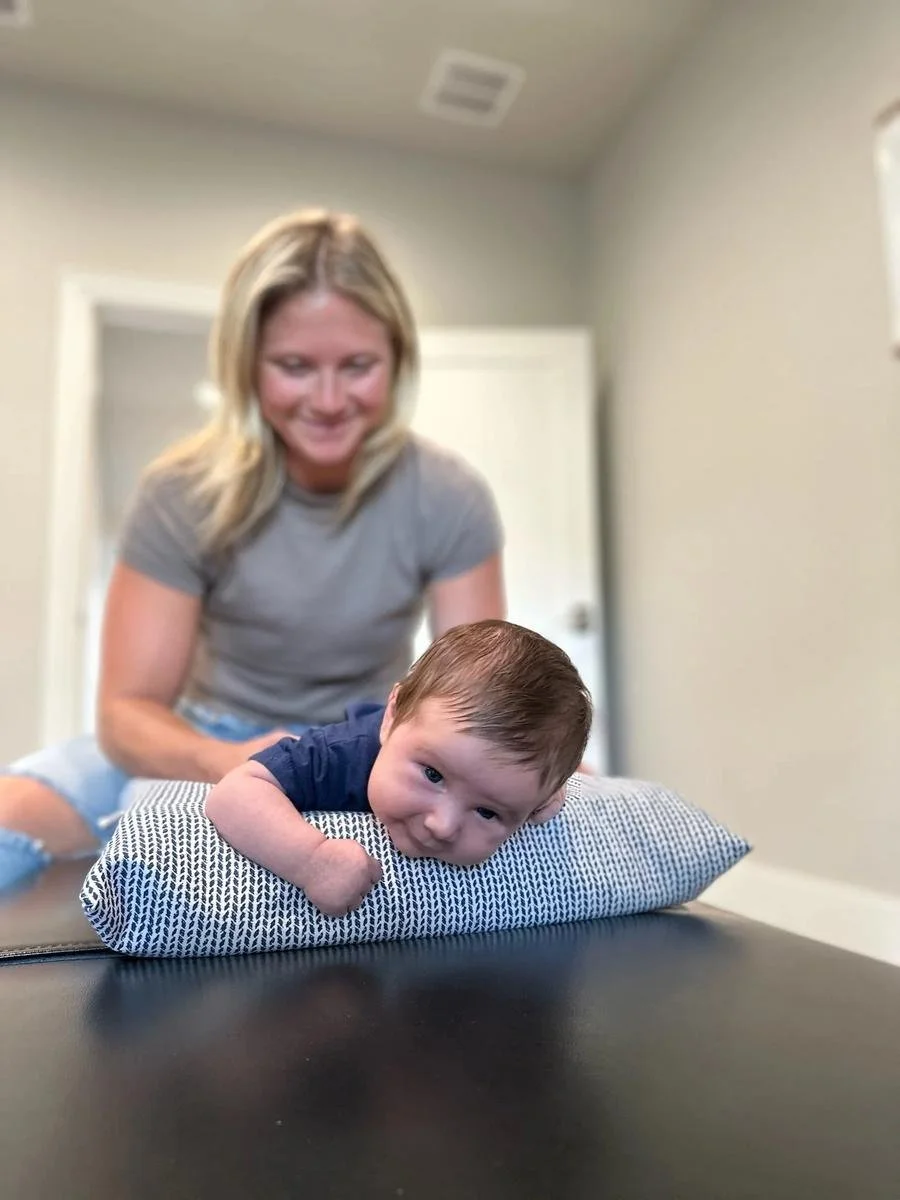
Torticollis involves both muscular tightness and, in many cases, cervical subluxation — particularly at C1 and C2. Gentle chiropractic adjustments and craniosacral therapy address both components: restoring proper cervical alignment and releasing the soft tissue tension that's restricting movement.
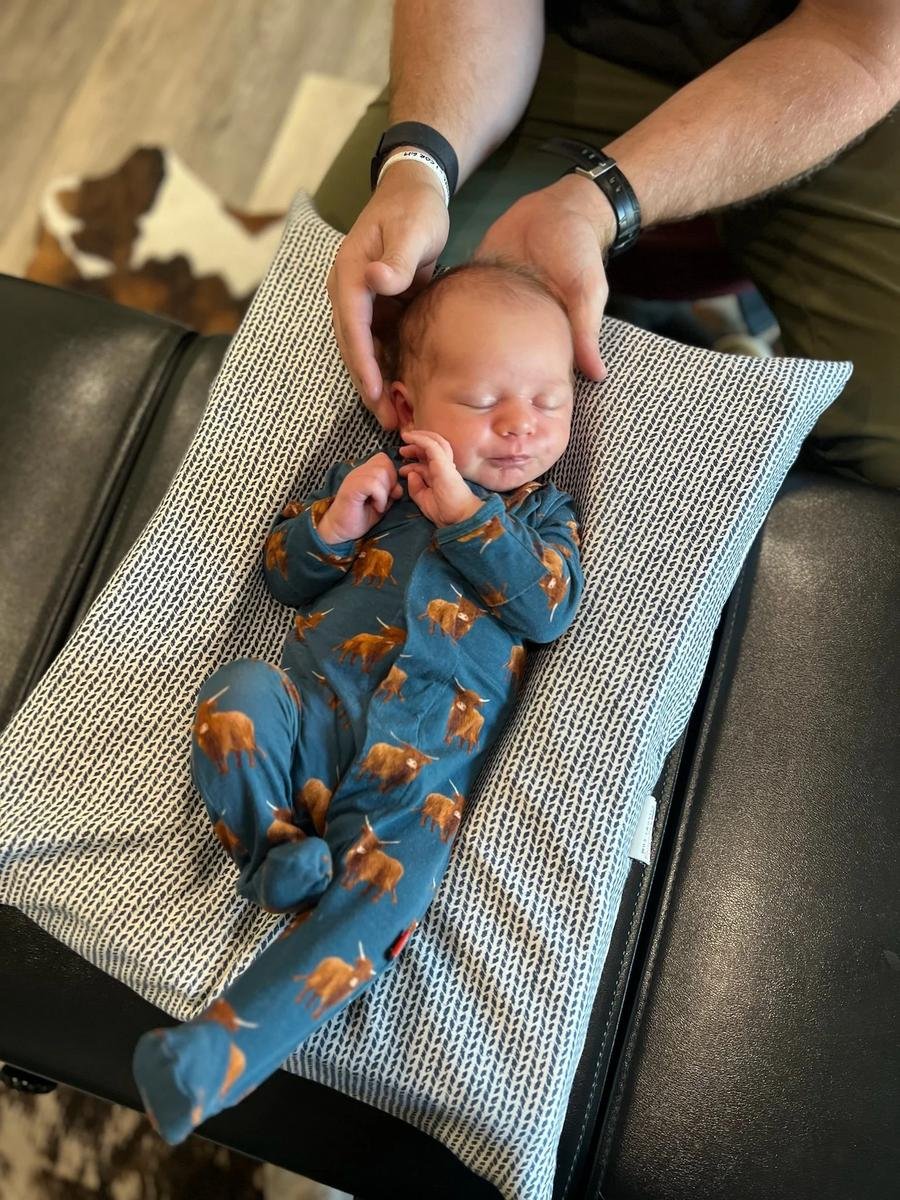
Our approach is specific and incredibly gentle. For infants, adjustments involve light fingertip contact only.
Early Intervention Matters
The earlier torticollis is addressed, the better the outcome. Untreated torticollis can contribute to plagiocephaly (flat head syndrome), delayed motor milestones, and compensatory patterns that affect development. If you notice any head tilt, turn preference, or asymmetry — don't wait.
Frequently Asked Questions
Still have questions? Take a look at the FAQ or reach out anytime. If you’re feeling ready, go ahead and apply.
-
Yes. Gentle cervical adjustments and craniosacral therapy address both the spinal misalignment and muscular tension contributing to torticollis.
-
As early as possible. The sooner we address the misalignment and tension, the faster your baby can develop normal range of motion.
-
Common causes include in-utero positioning, birth trauma, and prolonged time in restrictive devices. C-section and assisted deliveries also increase the risk.
-
Extremely gentle — fingertip pressure only. Most babies tolerate it well, and many relax during the adjustment.